

Manta Rays Are Not Cleaning Station Props: What New Okinawa Research Means for Your Dive
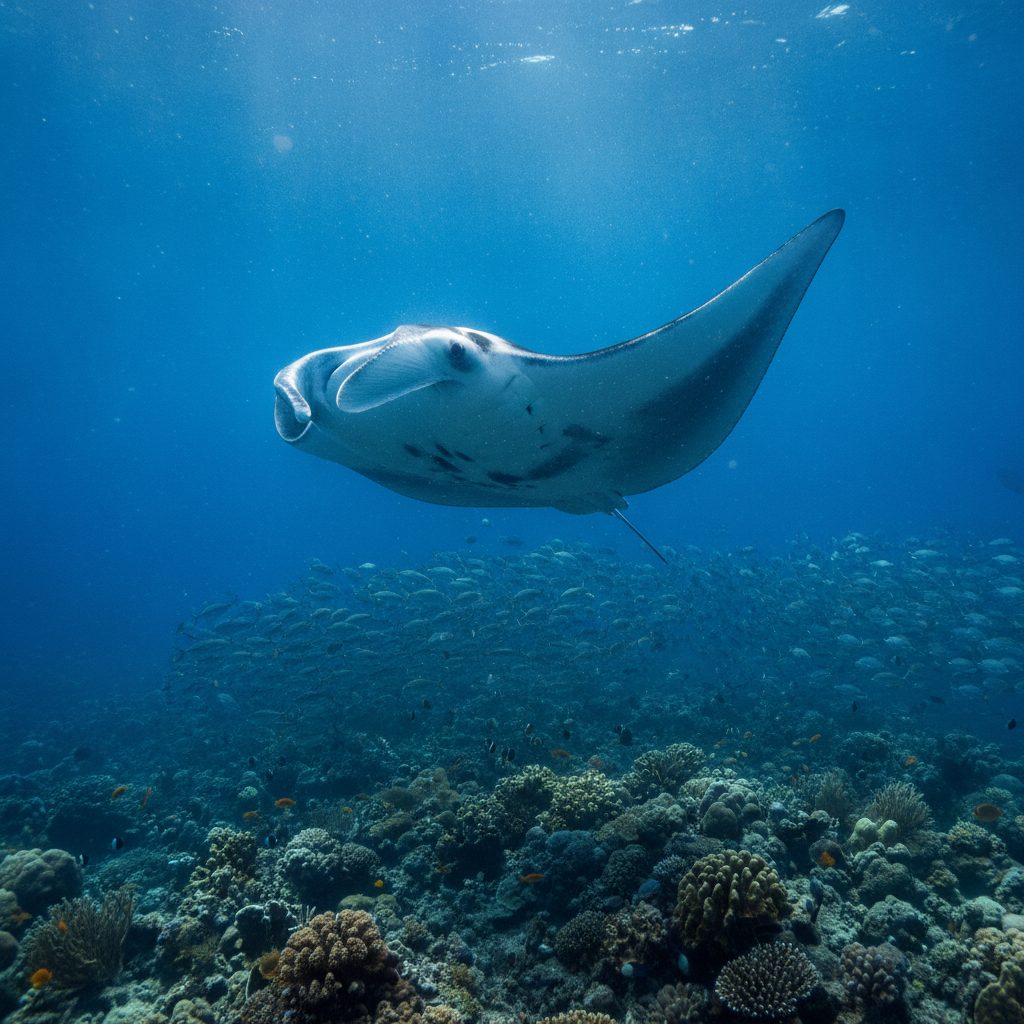
Reacting to: Manta Tracking Project (Yahoo/AP, July 2026)
When you book a manta dive in Okinawa, the marketing tells a simple story: graceful giants glide into a sandy "cleaning station" where you kneel and watch. Researchers tracking manta rays in Okinawa report that basic questions remain about how the animals move, where they feed, and how they may be affected by warming seas, coral reef degradation, and the pressure of tourism. It sounds passive, safe, and predictable. The reality is far more complex, and a new scientific paper should shift how thinking divers approach these encounters.
What the New Data Reveals
Scientists have tracked the first satellite-tagged manta ray in Japanese waters, which documented repeated dives to 300 metres with a maximum depth of 1082 metres, and undertook repeated long-distance movements between the Kerama Islands and Miyako Islands, including multiple transits across the Okinawa-Miyako Submarine Plateau. This is not casual bay behaviour. These are pelagic animals undertaking oceanic migrations at depths where human divers cannot survive unassisted. The manta you see at 8 metres on a cleaning station visit is an animal whose natural range includes the abyssal zone.
This matters because most recreational divers encounter only reef mantas (Mobula alfredi), the smaller species that actually uses shallow cleaning stations regularly. But giant oceanic manta rays (Mobula birostris) have been spotted around the Okinawa region, especially around Yonaguni and Miyako islands, though they are much rarer. The animals being tracked in the July 2026 research are oceanic mantas, a listed Endangered species, not the common reef form. Understanding that distinction is crucial for your conduct underwater.
Why This Matters for Your Dive Ethics
The "cleaning station" narrative has created an expectation among divers that manta rays welcome our presence and benefit from it. But the new research hints at a more fragile reality. The pressure of tourism is among the environmental stressors researchers are concerned about. When you are kneeling on sand surrounded by a dozen other divers, all waiting for a manta to approach, you are part of a system that may be disturbing an animal's natural feeding behavior or pushing it away from vital habitat.
The satellite data also reveals something harder to stomach: the manta you encounter may be a breeding individual, a migrant passing through, or an animal already stressed by warming water or declining plankton. These are not props in a dive fantasy. They are highly mobile, deep-diving creatures with conservation concerns. Oceanic manta rays have been uplisted to CITES Appendix I, highlighting conservation concern for the species.
What This Means for Your Next Dive
If you are planning to dive for manta rays in Okinawa, especially around the Kerama Islands where the tracked animal was found, your responsibility has just increased. A few practical shifts:
- Ask your dive operator whether they track individual animals via photo ID and maintain sighting logs. Operations that monitor the same manta over time are collecting data that may help conservation efforts. Casual "manta guaranteed" shops are not.
- Choose operators who limit group size and diver density at any given site. Dense crowds increase disturbance and stress to animals that may already be navigating warming seas and reduced food availability.
- Understand that "no guarantee" is actually the responsible message. If an animal does not appear, that is normal. Presence varies by day, by season, by temperature, and by what the manta needs to do.
- When a manta does approach, stay still and allow the animal to decide proximity. Do not chase, corner, or touch. The animal's natural instinct is to flee; respect that.
The Okinawa manta tagging project is still in early stages, with only one animal successfully tracked to date. More tags and longer observation will yield clearer patterns. But the preliminary message is clear: Okinawa's manta rays are not resident performers. They are oceanic migrants with behaviors we are only beginning to understand. Your dive choices, multiplied across hundreds of visiting divers per month, either support that scientific curiosity and conservation urgency, or ignore it.
Okinawa diving conditions and seasons change throughout the year, and manta presence varies with temperature and plankton blooms. Yonaguni Island is also home to oceanic species and offers year-round diving. Understanding marine seasons is part of being a thoughtful diver. Drift diving techniques are essential for deep water and strong-current dives common in Okinawa. For longer trips, Ogasawara Islands also host rare manta encounters. And night diving may reveal different aspects of manta feeding behaviour that surface dives do not.
Written with AI assistance and checked against the public sources linked above. Not a substitute for a certified local dive briefing.
← Back to the Dive Japan Journal, or explore dive destinations and maps of Japan.
