
Hokkaido
Japan's northern island offers a kind of diving you simply cannot find anywhere else in the country. While the rest of the archipelago chases coral and tropical fish, Hokkaido turns its back on the warm Kuroshio and looks toward the Arctic. The result is a cold-water frontier of drift ice, kelp jungles and crystalline blue bays populated by creatures most divers know only from photographs. Come in deep winter and you can drop through a ceiling of frozen sea; come in summer and the same coastline glows a startling cobalt.
Diving under the drift ice at Shiretoko and Rausu
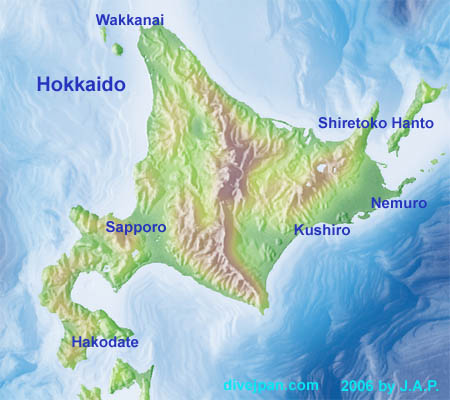
Each February and March, ice born in the far north drifts south across the Sea of Okhotsk and piles up against the Shiretoko Peninsula, a UNESCO World Heritage site on Hokkaido's remote northeastern tip. This is the only place in the Northern Hemisphere where sea ice reaches such low latitudes, and diving beneath it is one of the most surreal experiences in the sport.
Divers slip through a hole cut in the floe into water that can hover near -2°C. On a clear day the scene is otherworldly: sunlight filters through the ice overhead, casting shifting blue light onto a frozen ceiling while the divers explore a shallow, sheltered world below. Dives are short and shallow by design, typically under 30 minutes and rarely deeper than about 15 metres, because the cold dictates the schedule far more than your air gauge does. Rausu, on the peninsula's Pacific side, anchors much of this winter activity and rewards summer visitors with lush kelp forests.
Sea angels and other cold-water characters
The undisputed star of the ice season is the clione, a tiny shell-less sea snail that flutters through the water on a pair of wing-like flaps. Locals call them "drift ice angels," and watching one hover translucent against the dark water, you understand why. With luck you may also share the water with seals, while the floes above teem with eagles and seabirds that draw photographers from around the world.
If the ice and frigid water are out of your comfort zone, the surface still delivers: drift-ice walks and icebreaker cruises out of Abashiri and Rausu let non-divers witness the spectacle without ever getting wet.
Shakotan and the "Shakotan Blue"
For divers who prefer their water liquid, the Shakotan Peninsula on the Sea of Japan coast is Hokkaido's summer showpiece. From June to August the sea here turns so vividly transparent that residents gave the colour its own name: Shakotan Blue. Visibility regularly exceeds 25 metres, revealing dramatic volcanic columnar rock formations, rugged walls and kelp draping the reefs. Giant Pacific octopus, lumpsuckers, Atka mackerel and the occasional Steller sea lion give the cold water genuine character, and the late-summer sea urchin is famous on plates across the island.
Plan your dive
- Best season: Ice diving runs February to March at Shiretoko/Rausu; clear blue water and kelp diving at Shakotan peak from June to August.
- Water temperature: Roughly -2°C to 3°C under the winter ice; cool single-to-low-double digits in summer. A drysuit is essential for ice diving and strongly advised year-round.
- Visibility: Around 20 metres beneath the ice on a bright day; over 25 metres at Shakotan in summer.
- Level: Ice diving is for experienced divers comfortable in a drysuit; Advanced Open Water certification (or equivalent) plus a thorough safety briefing is the sensible standard. Shakotan's summer sites suit a broader range of certified divers.
- Getting there: Fly into New Chitose (Sapporo) and connect to the regions; the Shiretoko area is reached via Memanbetsu Airport near Abashiri, then road to Rausu or Utoro. Shakotan is a scenic drive west from Otaru. Booking through an operator that supplies drysuit gear and a winter brief is essential.
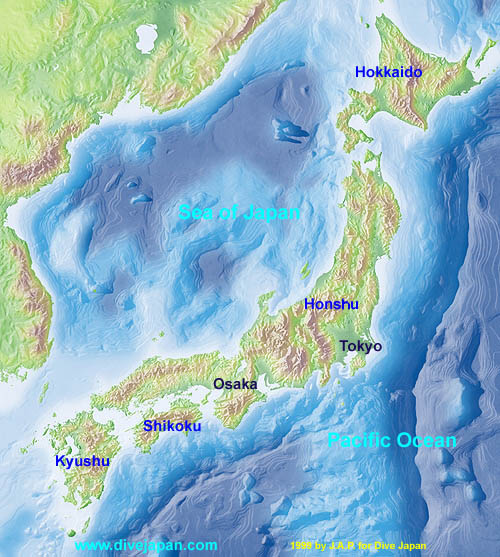
Hokkaido is not a destination you stumble into between warmer dives. It asks for the right gear, a tolerance for cold and a little planning, and in exchange it hands you experiences, sea angels under the ice, that no warm-water trip can match. For more of Japan's range, browse our other destinations or plot your route on the maps.