

Diving Ogasawara: 24 Hours to Japan's Pacific Galapagos
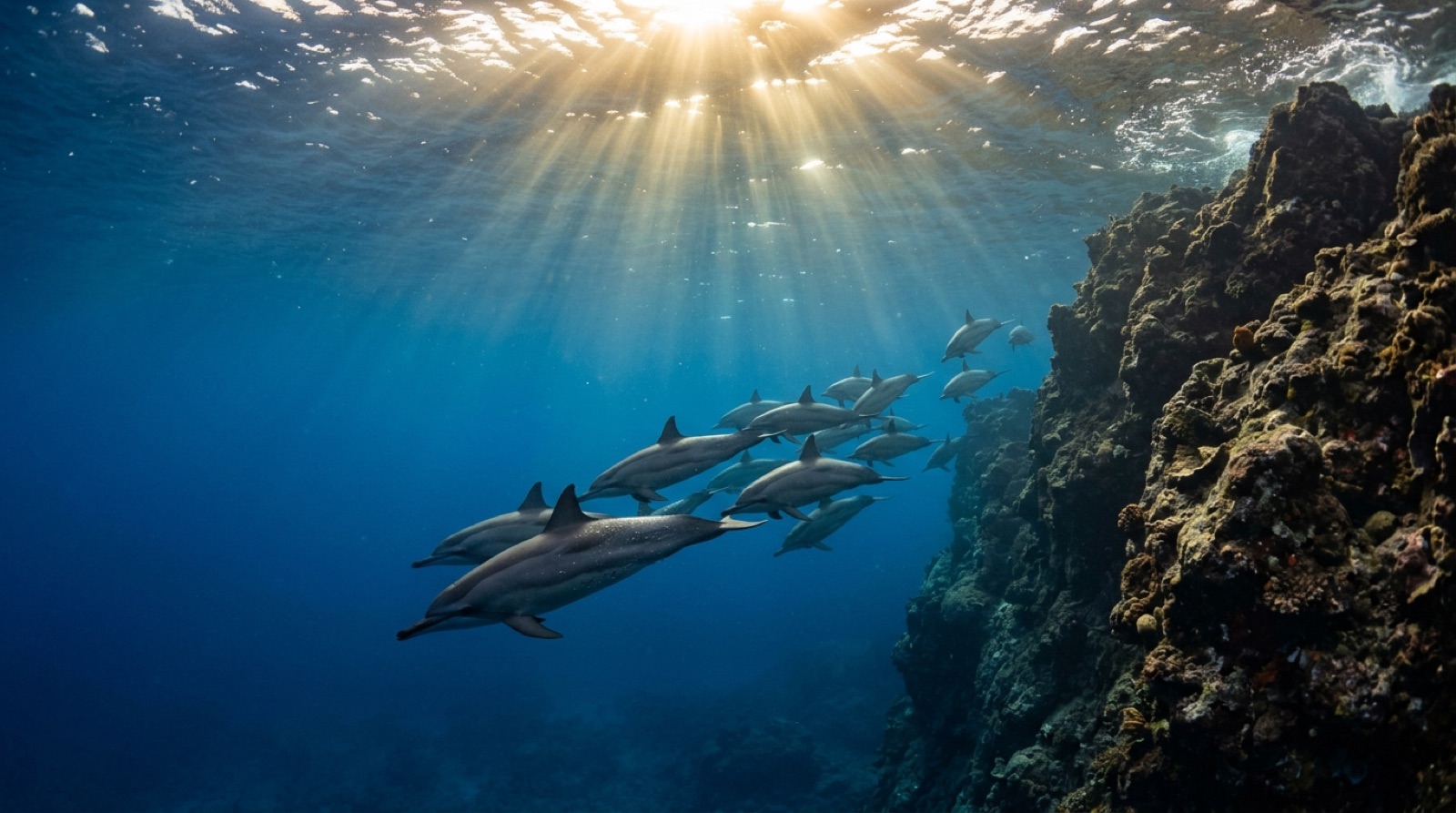
Some dive destinations you fly to. Ogasawara you commit to. There is no airport on these islands, and there never has been—the only way in is a 24-hour crossing of open Pacific aboard the Ogasawara Maru, sailing roughly once a week from Tokyo's Takeshiba pier to the port of Chichijima, nearly 1,000 km south. That single logistical fact is exactly why the diving here feels like nowhere else in Japan. The Bonin Islands have never been connected to a continent, and the marine life reflects that isolation. Divers call it "the Galapagos of the Orient," and for once the marketing barely oversells it.
Why Ogasawara is different
Because the archipelago rose from the seabed and stayed cut off, its reefs assembled their own cast of characters. You get a genuine blend of temperate and tropical species, endemic fish found nowhere else, and—crucially—so few divers in the water that the animals behave as if they have never learned to be wary of people. Visibility routinely runs 30 metres and beyond over volcanic drop-offs, sand chutes and boulder fields.
The headline encounter is dolphins. Resident pods of spinner and bottlenose dolphins are habituated enough that snorkel-and-swim programmes are a staple of every operator's week. Unlike the single-species dolphin swims off Mikurajima in the Izu island chain, Ogasawara pairs its dolphins with serious scuba: schooling barracuda and jacks, whitetip and grey reef sharks patrolling the corners, eagle rays, green turtles on nearly every dive, and dogtooth tuna cruising the blue.
Summer underwater: whales, sharks and blue water
July and August are prime. Water temperatures climb to around 27–29°C, so a 3 mm wetsuit is plenty, and the settled surface conditions that make the crossing bearable also open up the exposed outer sites. This is sperm whale season on the surface—Ogasawara is one of the few places on Earth where resident sperm whales are watched in summer, with humpbacks taking over from roughly January to April.
Below the waterline, summer is when the pelagic action along the walls peaks and the shallow reefs are at their most colourful. It is a very different flavour of Japanese summer diving to the manta-focused trips down in the Okinawa and Yaeyama region, or the current-swept pinnacles further west—here the draw is sheer wildness and space rather than a single signature animal.
Hahajima and the outer islands
Most divers base themselves on Chichijima, the main island, where the operators, guesthouses and the harbour cluster. A further two-hour local ferry reaches Hahajima, quieter still, with steep walls and healthy hard coral. Boat dives are the norm; the reefs sit offshore and the terrain rewards good buoyancy and comfort in blue water with no bottom in sight. This is not a place to log your first ten dives.
Plan your dive
- Level: Best for Open Water divers with some experience and confident buoyancy. Blue-water dives, mild-to-moderate currents and offshore boat entries make it a poor pick for absolute beginners—build up on the mellow bays of the Izu Peninsula first.
- Getting there: The Ogasawara Maru is the only route—about 24 hours each way, sailing roughly weekly. The schedule dictates your whole trip: most visitors stay 5–6 nights until the ship returns, so book the ferry before anything else.
- Season: Diving runs year-round. Summer (July–September) brings the warmest water (~27–29°C) and sperm whales; winter offers humpbacks and calmer topside conditions but cooler seas.
- What you'll see: Spinner and bottlenose dolphins, green turtles, reef sharks, dogtooth tuna, schooling jacks and barracuda, plus Bonin endemics.
- Bring: A 3 mm suit for summer, plus reef-safe sun protection—the whole archipelago is a UNESCO World Heritage site and operators take conservation seriously.
How it fits a wider Japan trip
Ogasawara is a destination in itself, not a stopover—the ferry schedule makes day-tripping impossible. But it pairs conceptually with Japan's other remote frontier dives: the pelagic drama of the westernmost island of Yonaguni and its winter hammerheads, or the volcanic seascapes scattered across our full Japan dive destinations index. If your ideal trip is measured in wildlife encounters per dive rather than convenience, few places in the country—or the world—deliver like the Bonins.
← Back to the Dive Japan Journal, or explore dive destinations and maps of Japan.
