

July Manta Rays in Ishigaki: The Overlooked Peak Most Divers Miss
The Trigger
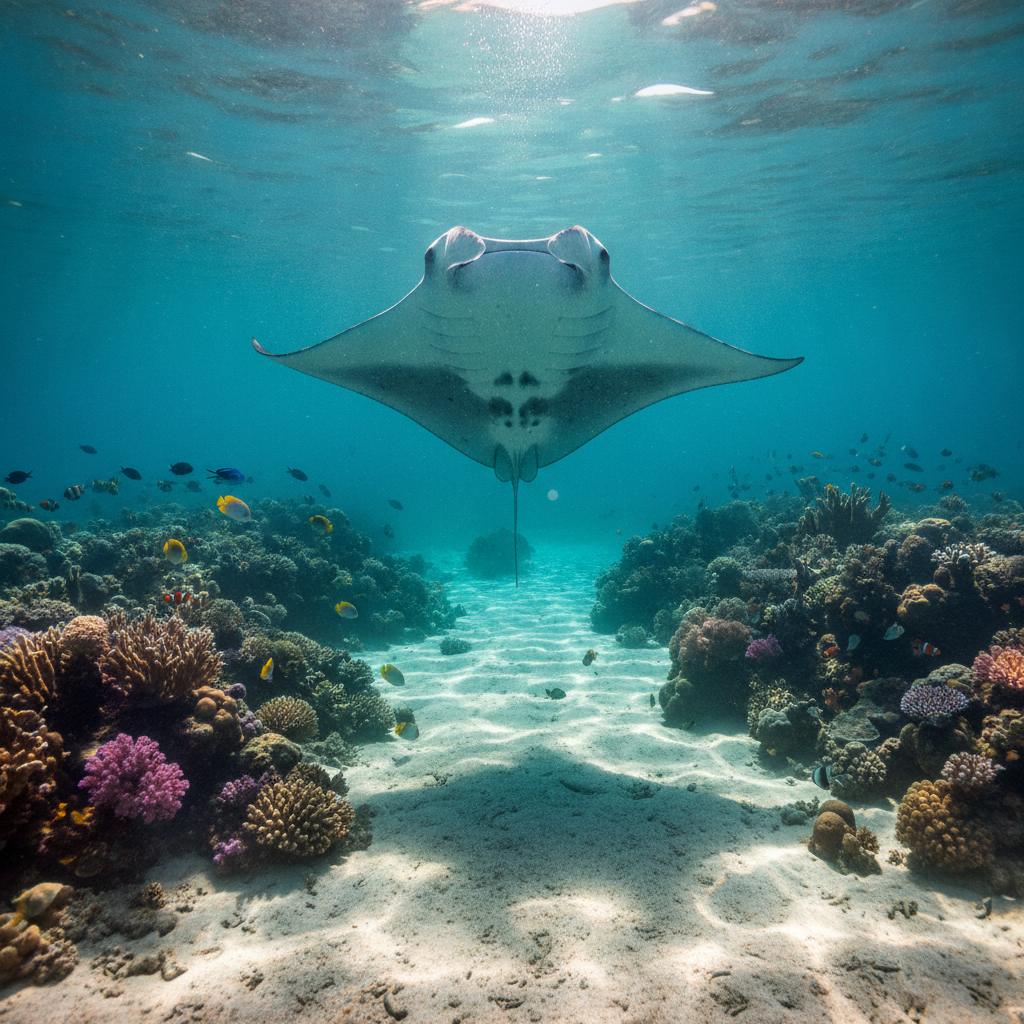
The season from summer to autumn (July, August, September, October) is the season with the highest chance of encountering manta rays in Ishigaki Island, according to activity guides that track local encounter rates. More specifically, peak manta season is between June and November, especially the July to September period. Yet the diving industry and most travel guides have conditioned recreational divers to think "autumn" when they think mantas, creating a self-fulfilling prophecy: everyone books September and October, which pushes dive operators to market those months hardest, which makes those months seem "best," when in fact August offers the best marine conditions of the year on the main island and manta ray season is in full swing on Ishigaki.
Why the Autumn Bias is Wrong
This is a classic case of perception shaping reality, and it favors the diver willing to challenge the consensus. The encounter rate does not drop from August to September; if anything, it remains stable or rises as the water warms toward peak September temperatures. But the timing is arbitrary. Divers cling to autumn because guidebooks emphasize it, and guidebooks emphasize it because that's when tour operators have historically booked the most groups. Nobody collects hard encounter-rate data that distinguishes July from September in any meaningful way. In fact, there is good reason to believe July offers an advantage: September stays hot, 28–31°C, and the ocean remains warm at 27–29°C, but typhoon risk is still elevated and historically September has seen some of the most powerful storms to hit the prefecture. July sits at the tail end of rainy season but before serious typhoon risk ramps up. The water is already warm enough (typically 25–28°C). And the crowds have not yet arrived.
The deeper insight is behavioural. Manta rays congregate at cleaning stations year-round, but they aggregate more densely during the summer-to-autumn period because warm water and plankton abundance bring them to the northern side of Ishigaki and Kabira Bay. This pattern is geophysical, not seasonal marketing. A diver on site in late July is statistically no worse off than one arriving in mid-September; they are simply more likely to find a dive boat with space, a guide who isn't hurried, and a less congested reef. Those are operational advantages that matter more to most divers than the marginal difference in water temperature or current strength.
What This Means for Your Trip
If you are planning a Manta Scramble dive at Kabira, July 22 is peak season *right now*. Do not wait for autumn. Book this week if you can. In accordance with local rules for manta protection, there cannot be more than 5 dive boats at this place at the same time, which means capacity is the real constraint. In July, you are more likely to secure a slot and a smaller group ratio. You will see mantas; the odds are as good as in October. The water is warm, the current is moderate, and you will spend less time in a queue on the surface watching other divers.
If you are already in Okinawa on the mainland or at another island, Ishigaki is a quick one-hour flight from Naha. Do not overthink the season. The fact that you are reading this in late July means you are in the window. Drift diving is the norm here, so be confident in your buoyancy and current-awareness; most of the manta sites have strong currents, especially Tokakin, where you may also encounter hammerheads and pelagics. If Ishigaki is too booked or weather is deteriorating (check local typhoon forecasts), consider Iriomote's southern sites, where manta cleaning stations are scattered on the southern and eastern sides with the main local manta season being January to early summer months, or Yonaguni Island if you want to combine pelagics with the mysterious monument.
One final note: manta season is not a guarantee, it is a probability. Local dive shops report encounter rates of 80–90% in peak months, not 100%. Weather, current strength, and pure chance always play a role. But the marginal difference between July and September is negligible. What differs sharply is the crowd, the price, and your peace of mind on the boat. Choose the shoulder month, not the fashion month.
Activity Japan Manta Encounter Guide
Beach diving is also an excellent option for lighter days or rest days in Ishigaki and throughout Okinawa. Many shops offer guided shore entries at reduced cost, and you can scout sites with a dive map before committing to a boat trip. If you need background reading, consult diving books on Japan or ask your operator for site-specific briefings.
Written with AI assistance and checked against the public sources linked above. Not a substitute for a certified local dive briefing.
← Back to the Dive Japan Journal, or explore dive destinations and maps of Japan.
