

Diving Ishigaki in Summer: Manta Rays at Kabira Manta Scramble
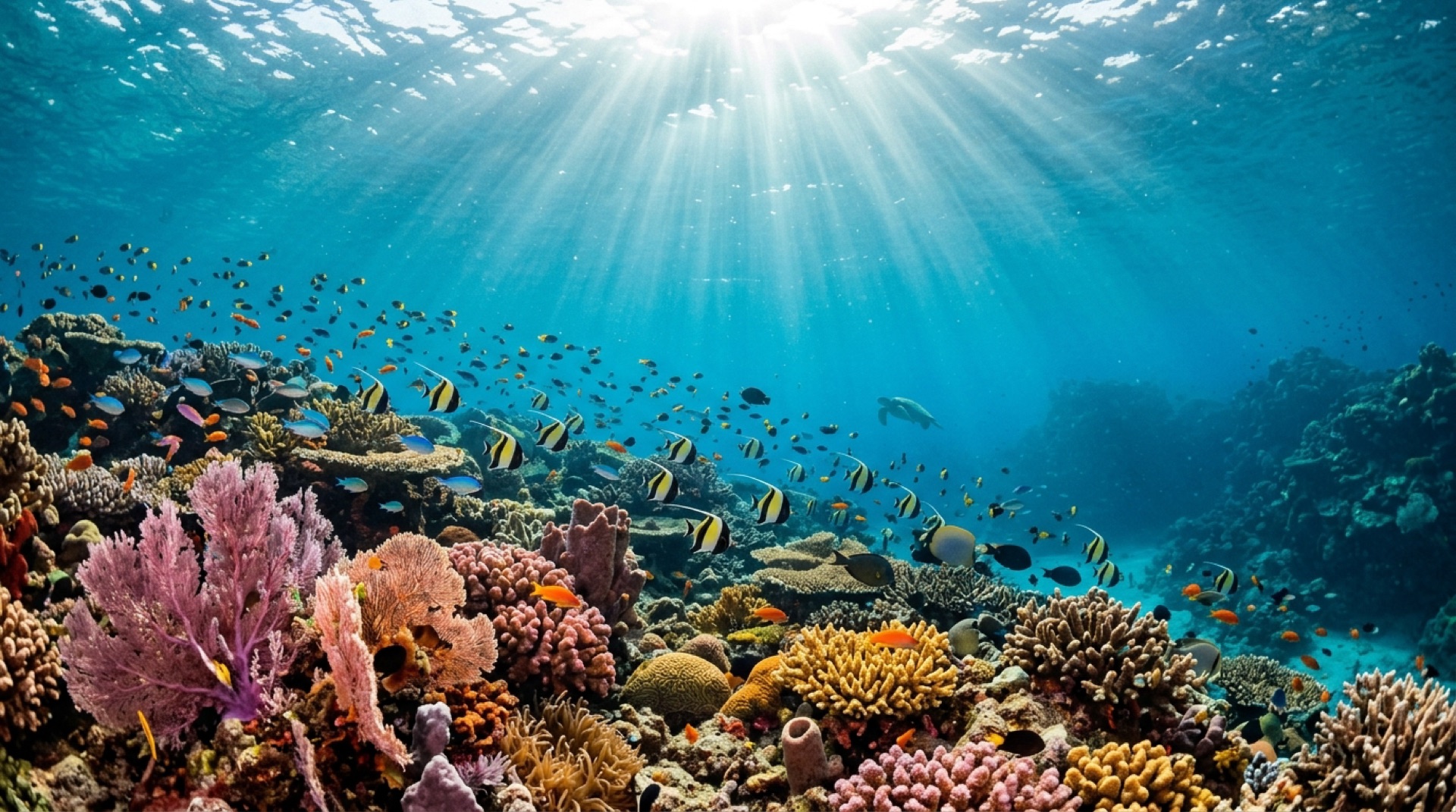
Few underwater encounters in Japan match the moment a reef manta ray glides out of the blue, banks overhead, and blots out the summer sun. The Yaeyama Islands at the far southwestern tip of Okinawa Prefecture are one of the most reliable places on Earth to have that encounter, and mid-summer is prime time. If you are planning a July or August trip, Ishigaki's cleaning stations should be at the top of your list.
Why summer is manta season in the Yaeyamas
Reef mantas (Mobula alfredi) visit Ishigaki's shallow coral bommies year-round, but sightings become dramatically more frequent from roughly early summer through autumn. Warm, plankton-rich water draws them in to feed, and the same coral heads double as cleaning stations where small wrasse pick parasites from their skin. Divers who settle quietly on the sand can watch mantas queue up and circle the same bommie for a full dive. Water temperatures in July and August typically sit around a bath-like 28–29°C, so most divers are comfortable in a 3mm wetsuit.
Kabira: Manta Scramble and Manta City
The headline site is Kabira Manta Scramble, a sandy channel off Kabira Bay dotted with cleaning bommies in about 10–20 metres of water. Its neighbour, Manta City Point, offers a similar setup. Both are shallow enough that no-decompression time is generous, letting you spend a long, patient dive watching the action rather than chasing it. The key is to stay low, breathe slowly, and let the mantas come to you — approaching or hovering directly above a cleaning station usually just pushes the animals away.
- Depth: ~10–20 m, easy for most certification levels.
- Conditions: can be current-swept; a drift-style briefing is common. If you are new to moving water, brush up on drift diving technique before you go.
- Etiquette: no touching, no chasing, no flash directly at the animals.
What else you'll see
The Yaeyamas are far more than mantas. Ishigaki's fringing reefs hold healthy hard and soft coral, schooling snapper and fusiliers, sea turtles, and a rich cast of macro life for photographers. Serious divers often pair Ishigaki with a day trip or liveaboard leg to nearby Yonaguni, Japan's westernmost island, famous for its winter hammerhead schools and enigmatic underwater rock formation. Together the two islands make a strong argument for the southern reaches of diving in Okinawa being Japan's tropical highlight.
Getting there and choosing an operator
Ishigaki has its own airport (ISG) with direct flights from Naha, Tokyo, and Osaka, making it far easier to reach than the multi-day ferry haul to Ogasawara. Dive shops cluster around Ishigaki City and Kabira, and most run daily two- or three-tank boat trips to the manta points, weather permitting. Because summer is peak season for both divers and mantas, book your boat several days ahead rather than walking up. For a wider view of how the Yaeyamas fit into the country's dive map, our destinations overview lays out the regions from Hokkaido's ice diving to these southern coral islands.
Plan your dive
- When: Manta sightings peak roughly June–November; July–August brings the warmest water (~28–29°C) and long daylight, but also afternoon squalls and the outer edge of typhoon season — build a buffer day into your itinerary.
- Level: Open Water is enough for the shallow cleaning stations, but comfort in mild current helps. Log a checkout dive first if you have been out of the water for a while.
- Gear: 3mm wetsuit, reef-safe sunscreen, and enough weight to stay settled on the sand so you are not fluttering over the bommies.
- Weather: Trips are cancelled or relocated when swell picks up, so keep the schedule flexible and confirm the forecast with your shop the night before.
- Respect the animals: Sightings are never guaranteed. Mantas are wild, and the healthiest dive is one where you leave the cleaning station exactly as you found it.
Ishigaki rewards patience over aggression. Settle onto the sand, watch the water above you, and let Japan's summer giants do the rest.
← Back to the Dive Japan Journal, or explore dive destinations and maps of Japan.
